If Ibn ʿUqda were to shake the dust from his grave, he would disavow the compiler of it and the attribution to him
The question was: Give me an example of what you mean by the Imāmīs’ laxity in attributing books and manuscripts to individuals.
The answer: They hear—or it is narrated to them—that so-and-so has a manuscript, an ‘original’ (aṣl), or a book. Then one of their mujtahids—thinking he is doing something good, or perhaps with malicious intent—looks at scattered reports in several books attributed to that person. He then begins gathering those scattered reports, collects them into a single book, and then says: This is the aṣl of so-and-so.
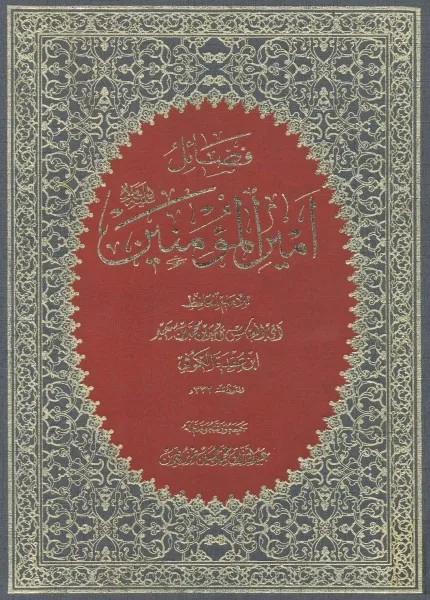
A living example in our own time: it is reported that Ibn ʿUqda, the Zaydī ḥāfiẓ, had a book on the Wilāya of the Commander of the Faithful (peace be upon him). So what did an Imāmī mujtahid do? He gathered Ibn ʿUqda’s scattered narrations found in the books of al-Nuʿmānī, al-Ṭūsī, and others, all speaking about the Wilāya of the Commander of the Faithful. Then the Imāmī mujtahid published the book under the title Faḍāʾil Amīr al-Muʾminīn and attributed it to Ibn ʿUqda—until today, immature researchers are deceived and say: This is Ibn ʿUqda the ḥāfiẓ narrating reports about the Twelve—where? In his book?! Is this proof against the Zaydīs?! A Zaydī ḥadīth scholar, and in his own book!! And thus begins a chain of exaggerations and scholarly immaturity.
It should be mentioned that the editor of this Faḍāʾil book did note inside the book that his work is merely a compilation—and this is better than his predecessors, who do not make such a note. Nevertheless, the worst kind of deception and misrepresentation occurred on the book’s cover, where the book was definitively attributed to the ḥāfiẓ Ibn ʿUqda. Added to this are the isolated narrations transmitted by Imāmī transmitters alone from Ibn ʿUqda concerning reports of the Twelve—despite the fact that he was the foremost ḥāfiẓ of his time, and no one else transmitted such material from him. If we were to accept their narrations from him, we would likewise have to accept them from al-Bāqir, al-Ṣādiq, and al-Kāẓim (peace be upon them). But it is a dark and problematic ḥadīth legacy from every angle, for one who researches and reflects.
The published book is not by Ibn ʿUqda. If he were to shake the dust from his grave, he would disavow its compiler and the attribution to him. Despite all this, the group has sophistry and tricks for those who lack insight, using obfuscation and artificial accumulation.
In the same manner, they attributed books and manuscripts to the early companions of the Imams. We have a research volume on this matter that is nearing completion, addressing this issue. God facilitates the means to every good.
May God grant you success.
O God, send blessings and peace upon Muḥammad and upon the family of Muḥammad.
Translation of Ustadh Kadhim Al Zaydi (May Allah reward him)