Dr. Al-Murtadha Bin Zaid Al-Mohatwari (The Martyr of the Pulpit)
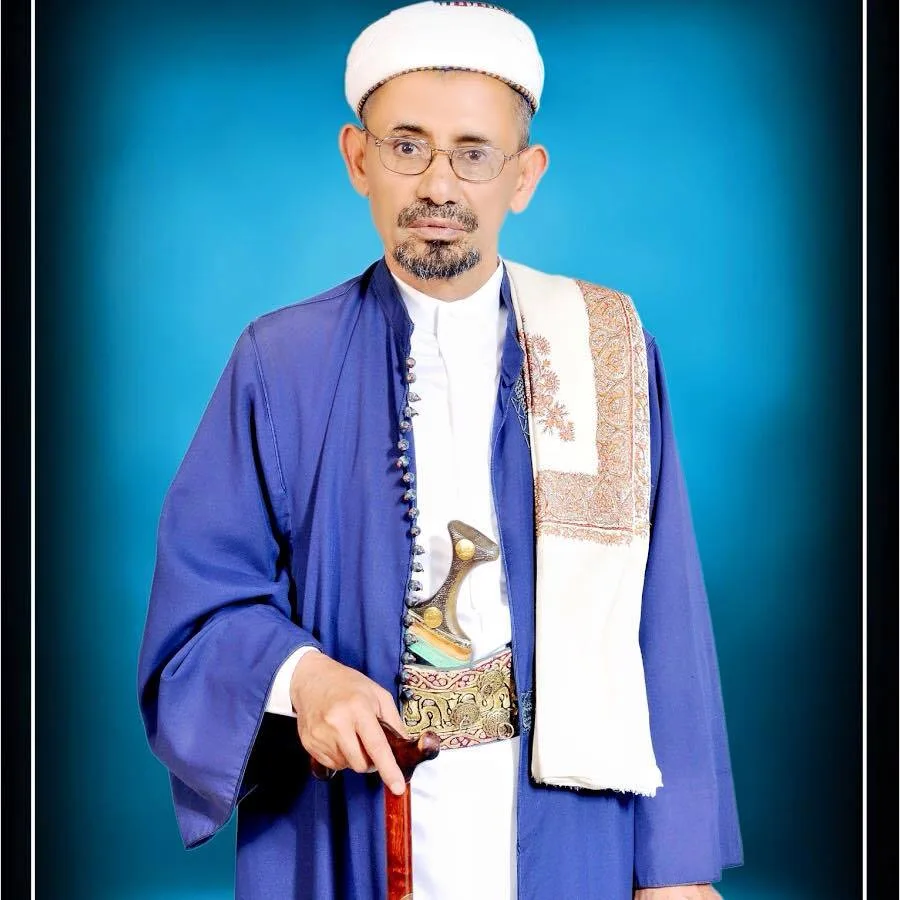
Name:
Al-Murtadha bin Zaid bin Zaid bin Ali Al-Mohatwari Al-Sharafi Al-Hasani
Date of Birth:
13th of Ramadan, 1373 AH — corresponding to May 14, 1955 CE
Born in the village of Bani Asad – Hajr district – Al-Mahabishah subdistrict – Hajjah Governorate.
Death and Martyrdom:
The Honourable Scholar was martyred on the 20th of Jumada Al Awal, 1435 AH – corresponding to March 21, 2014 CE.
He was murdered during a terrorist attack on the Al-Shahid Al-Mohatwari Mosque (also known as Al-Mohatwari Mosque) in Sana’a, Yemen, where he was delivering Friday prayers.
The terrorist attack was carried out by Al-Qaeda in Yemen.
Specializations and Talents:
A scholar, jurist, and independent legal theorist (mujtahid); an eloquent preacher and influential public speaker; a devoted caller to Islam with a large following among the people.
He was known for his frankness, courage, diligence, humility, and love for goodness and for students of knowledge — having devoted his life to serving them.
He held a Doctorate in Islamic Law (Sharia) from Cairo University,
and also received numerous academic authorizations (ijāzāt) from prominent scholars of Yemen and the wider Islamic world in various branches of both rational and transmitted sciences.
History of Work:
Sana’a University – Faculty of Sharia and Law
President of Badr Scientific and Cultural Center – Imam of the Grand Badr Mosque
Responsibilities of his Work:
Teaching at the university and at Badr Center, overseeing its administration, editing and verifying manuscripts, and serving as the preacher (khatib) of Badr Mosque.
Highest Academic Qualification:
Ph.D. from Cairo University, 1994 – Department of Usul al-Fiqh (Principles of Islamic Jurisprudence).
He also received numerous scholarly authorizations from senior Yemeni and other Islamic scholars.
Upbringing and Education:
He was born on the 13th of Ramadan, 1373 AH / 1954 CE in the village of Bani Asad – Hajr district – Al-Mahabishah subdistrict – Yemen.
There he grew up and began his education, studying the Qur’an in the traditional kuttab (maktab / mi‘lamah), and he learned the elementary sciences under his father, the scholar Sayyid Al-‘Allamah Zaid bin Zaid Al-Mohatwari.
Scholarly Education:
He migrated to Al-Mahabishah, where he studied at the Madrasa ‘Ilmiyyah (religious school), but did not remain long there.
He then moved to Sana’a, where he studied in the Great Mosque (Al-Jami‘ Al-Kabir) and in other mosques of Sana’a, as well as in the homes of scholars.
He studied the Qur’an under:
- Shaykh Muhammad bin Ali Al-‘Umari, a master reciter and scholar of Qur’anic readings,
- Shaykh Ali Al-Watri,
- Shaykh Muhammad Hussein ‘Amir
- and Shaykh Yahya bin Ahmad Al-Halili
He received ijazat from them.
He also studied with others in the fields of:
Qur’anic exegesis (tafsir), Arabic language (morphology, grammar, rhetoric, and literature), jurisprudence (fiqh), principles of jurisprudence (usul al-fiqh), inheritance law (fara’id), theology (‘aqidah / usul al-din), and logic (mantiq).
Formal Education:
- Bachelor’s Degree in 1402 AH / 1982 CE, with honors and a very good grade, from the Faculty of Sharia and Law – Sana’a University.
- Master’s Degree (Diploma in Sharia) in 1987 CE.
- Ph.D. in Usul al-Fiqh (Principles of Islamic Jurisprudence) from Cairo University, Faculty of Law,
awarded on 14 Rajab 1415 AH / December 17, 1994 CE, with a very good grade.
Scientific Conferences Attended:
- Conference on the Unity of Religions – USA
- Conference on the Iraq War
- Conference on Rapprochement Between Islamic Sects – Jordan
- Conference on Rapprochement Between Islamic Sects – Syria
- Seminar of the Al-Manar School on Muhammad Rashid Rida
Positions and Roles Held:
- President of Badr Scientific and Cultural Center
- Imam and Friday Preacher of the Grand Badr Mosque
- Deputy President of Badr Charitable Society
- Professor of Usul al-Fiqh at Sana’a University – Faculty of Sharia and Law
- Member of the Association of Yemeni Scholars
- Head of the Committee for the Authorship and Verification of Islamic and Yemeni Heritage at the Center
- Chairman of the Advisory Board of the Yemeni Association for the Promotion of Culture and Knowledge
- Chairman of the Board of Trustees of the Yemeni Foundation for the Development of Culture
He has striven tirelessly to teach Muslims the principles of the great Islamic faith, to revive the mosque’s educational and spiritual mission, and to train qualified scholars at a time when knowledge was on the verge of disappearing in a land about which the Prophet Muhammad ﷺ said:
“Faith is Yemeni, and wisdom is Yemeni.”
He has worked for nearly a quarter of a century, establishing centers to host students of knowledge, such as Badr Scientific Center and its branches, which he envisioned as the foundation of an Islamic university, God willing.
Social Activities:
He carried out numerous activities serving knowledge, scholars, and the Islamic faith, and was the founder of the scientific (religious-educational) movement in Sana’a.
He devoted himself day and night to teaching at the Badr Scientific and Cultural Center, conducting study circles and instructional sessions at Badr Mosque, in addition to delivering Friday and Eid sermons attended by large crowds.
He also revived religious occasions, using them to guide and educate society, especially during the blessed month of Ramadan, when he would deliver weekly lectures at the Great Mosque of Sana’a, attended by vast numbers of worshipers.
He regularly gave guidance lectures in most mosques across the capital and in neighboring villages and towns,
and was also known for answering religious questions and issuing fatwas, as well as offering spiritual and social advice.
He sponsored numerous branch centers affiliated with the Badr Scientific and Cultural Center,
and worked diligently to correct misconceptions about Islam and Muslims in Western countries.
In addition, he was deeply involved in the publication and verification of Islamic heritage, through authorship and textual scholarship.
He also played a significant role in addressing social issues and resolving family and tribal disputes, employing a religiously grounded and practical approach.
His works:
1. ‘Adālat al-Ruwāt wa al-Shuhūd (The Integrity of Narrators and Witnesses)
(Doctoral Dissertation)
Length: 603 pages
This book discusses the concept of justice (‘adālah) according to hadith scholars and usul scholars, exploring the causes of criticism and validation (al-jarh wa al-ta‘dīl) with an academic dialogue engaging the hadith tradition.
It also examines the conditions for justice, testimony, and witnesses in modern life.
This work earned multiple academic awards and was recognized as the best doctoral dissertation of the year (1994) by the Faculty of Law, Cairo University.
2. Al-Sīrah al-Nabawiyyah (The Prophetic Biography)
Length: 399 pages
One of the most elegant works written on the life of the Prophet ﷺ.
The author compiled it from over one hundred sources, ensuring the authenticity of narrations, and added lessons and moral insights after each major event in the Prophet’s life.
3. Mutashābih al-Qur’ān (Ambiguous Verses of the Qur’an)
Considered one of his most significant works, it addresses the complex and seemingly similar Qur’anic expressions, analyzing them through linguistic, theological, and exegetical perspectives.
4. Mukhtasar fī ‘Ilm al-Tajwīd (A Summary of the Science of Qur’anic Recitation)
A concise manual outlining the rules of Tajwīd (proper Qur’anic pronunciation and recitation).
5. A Study on the Uprising of the Zaydis and the Khārijites
A comparative research paper discussing the historical and theological distinctions between the Zaydi movement and the Khārijite sect, highlighting common misconceptions.
6. Mukhtasar fī al-‘Aqīdah (A Summary on Islamic Creed)
A brief yet comprehensive treatise on the principles of Islamic belief, summarizing key theological issues with clarity for students and lay readers.
7. Al-Waṣiyyah wa al-Waqf (Bequest and Endowment)
A scholarly study explaining the rules and principles of wills and charitable endowments in Islamic law.
8. Mabāḥith fī Uṣūl al-Fiqh (Studies in the Principles of Jurisprudence)
An academic text dealing with methodological issues in Islamic legal theory, used by students of higher studies in the field.
9. Sharḥ Mukhtaṣar ‘alā Matn al-Kāfil (A Concise Commentary on “Matn al-Kāfil”)
Length: 149 pages
A summary commentary extracted and adapted from his earlier work Al-Kāshif fī Uṣūl al-Fiqh.
He added new explanations and clarifications to make it more accessible for beginners.
10. A Study on the Rapprochement Between Islamic Sects
A research paper focusing on bridging differences among Islamic schools of thought, emphasizing unity, tolerance, and mutual understanding.
His Critical Editions (Verified and Edited Works):
1. Yanābī‘ al-Naṣīḥah by Amir al-Ḥusayn bin Badr al-Dīn (Theology / Usul al-Din)
Author: Al-‘Allāmah Amir al-Ḥusayn bin Badr al-Dīn
Edited by: Dr. Al-Murtadha bin Zaid Al-Mohatwari
Length: 595 pages
A comprehensive work on Islamic creed (‘aqīdah) covering all major theological topics, supported by strong evidence from the Qur’an, Sunnah, and reason.
It also includes discussions and rebuttals of opposing viewpoints, defending the sound creed with clarity and scholarly depth.
2. Al-Kāshif li-Dhawī al-‘Uqūl by Sayyid Ahmad Luqmān (Principles of Jurisprudence)
Author: Al-‘Allāmah Ahmad bin Muhammad Luqmān
Edited by: Dr. Al-Murtadha bin Zaid Al-Mohatwari
Length: 549 pages
A key text in Usul al-Fiqh (Islamic legal theory) that gathers the most important foundational rules with examples.
It is regarded by scholars as sufficient for students of legal principles, being a commentary on “Matn al-Kāfil” by Al-‘Allāmah Muhammad bin Yahya Bahrān.
3. Al-Tibyān fī al-Nāsikh wa al-Mansūkh by Al-‘Allāmah Abdullah Al-Sa‘di (Qur’anic Studies)
Author: Judge Al-‘Allāmah Abdullah bin Muhammad bin Abi al-Najm
Edited by: Dr. Al-Murtadha bin Zaid Al-Mohatwari
Length: 96 pages
Covers the concept and causes of abrogation (naskh) in the Qur’an and Sunnah, listing the abrogated verses—both agreed upon and disputed—throughout the Qur’an, along with reasons for revelation of some verses.
4. Miṣbāḥ al-‘Ulūm fī Ma‘rifat al-Ḥayy al-Qayyūm
Author: Al-‘Allāmah Al-Hasan Al-Raṣāṣ
Edited by: Dr. Al-Murtadha bin Zaid Al-Mohatwari
(Theology – ‘Aqīdah)
A profound theological treatise discussing knowledge of Allah, His attributes, and divine unity, serving as a reference in rational theology.
5. Matn al-Ājurrūmiyyah by Ibn Ājurrūm and its commentary by Zayni Dahlan (Arabic Grammar)
Author: Muhammad bin Muhammad Al-Sanhāji (Ibn Ājurrūm)
Edited by: Dr. Al-Murtadha bin Zaid Al-Mohatwari
Length: 85 pages
One of the most important introductory books in Arabic grammar, presented with clear commentary useful for beginners in Arabic linguistics.
6. Al-Bid‘ah by Al-‘Allāmah Ali bin Ibrahim Al-Amir (Theology / Innovation in Religion)
Author: Al-‘Allāmah Ali bin Ibrahim Al-San‘ani
Edited by: Dr. Al-Murtadha bin Zaid Al-Mohatwari
Length: 60 pages
Discusses the definition of religious innovation (bid‘ah), its rulings, and examples of practices wrongly labeled as innovations or vice versa, restoring proper understanding through evidence.
7. Al-Rawḍah al-Bahiyyah Sharḥ Nukat al-‘Ibādāt
Author: Judge Al-‘Allāmah Ja‘far bin Ahmad bin ‘Abd al-Salām
Edited by: Dr. Al-Murtadha bin Zaid Al-Mohatwari
Length: 326 pages
A comprehensive fiqh manual covering acts of worship and transactions, each supported by its evidences.
The editor enriched the text with comparative opinions from Shafi‘i and Hanafi jurists, adding valuable scholastic and poetic notes.
8. Al-Rawḍah al-Nadiyyah Sharḥ al-Tuhfah al-‘Alawiyyah by Al-Amir Al-San‘ani (Virtues)
Author: Shaykh al-Islam Muhammad bin Isma‘il Al-Amir Al-San‘ani
Edited by: Dr. Al-Murtadha bin Zaid Al-Mohatwari
Length: 406 pages
Contains a poem praising Imam ‘Ali ibn Abi Talib, followed by a detailed commentary on each verse, supported by Prophetic traditions from authentic hadith sources and historical accounts.
The author, a renowned hadith scholar, is highly respected for his reliability and mastery.
9. Al-Ḥadā’iq al-Wardiyyah fī Manāqib A’immah al-Zaydiyyah by Al-Shahid Ḥamīd (History)
Author: Shaykh al-Islam Al-Shahid Ḥamīd bin Ahmad Al-Maḥallī
Edited by: Dr. Al-Murtadha bin Zaid Al-Mohatwari
Length: 812 pages
A biographical encyclopedia of the Imams of the Zaydi school, starting from Imam ‘Ali ibn Abi Talib and ending with Imam Abdullah bin Hamzah.
It presents details on each Imam’s birth, death, works, pledges, struggles, virtues, battles, descendants, and includes samples of their sayings, poetry, and elegies.
It is considered the finest historical record of the Zaydi Imams.
10. Usūl al-Aḥkām by Imam Ahmad bin Sulaymān (Fiqh and Hadith)
Author: Imam Ahmad bin Sulaymān
Edited by: Dr. Al-Murtadha bin Zaid Al-Mohatwari
A foundational work combining jurisprudence and prophetic traditions, highlighting legal principles derived from hadith evidence, reflecting the depth of early Yemeni Zaydi scholarship.
His Teachers:
Dr. Al-Murtadha bin Zaid Al-Mohatwari studied under a number of Yemen’s foremost scholars and jurists, from whom he received both knowledge and scholarly authorizations (ijāzāt). Among his most prominent teachers were:
- Judge Al-‘Allāmah Abdul-Hamid Mi‘yād
- Judge Al-‘Allāmah Muhammad bin Ahmad Al-Jurāfi, the Grand Mufti of the Republic of Yemen
- Sayyid Al-‘Allāmah Muhammad bin Muhammad Al-Mansur, senior scholar of Yemen
- His father, Al-‘Allāmah Sayyid Zaid Al-Mohatwari
- Judge Al-‘Allāmah Abdullah Al-Sarhi
- Judge Al-‘Allāmah Muhammad Al-Badri
- Sayyid Hussein Al-Dhafri
- Judge Ahmad Al-Siyāghi
- Judge Abdul Karim Qādi
- Judge Isma‘il Al-Raymi
- Sayyid Ahmad Hajar
- Sayyid Muhammad bin Ali bin Luṭf Al-Shami
- Judge Hamoud Hawāt
His Scholarly Authorizations:
Among the eminent scholars who granted him ijāzāt (licenses of transmission and scholarly recognition) were:
- Sayyid Al-‘Allāmah Al-Hujjah Majd al-Dīn bin Muhammad bin Mansur Al-Mu’ayyidi – Grand Mufti of Yemen
- Sayyid Al-‘Allāmah Badr al-Dīn Al-Houthi
- Sayyid Al-‘Allāmah Al-Hujjah Ahmad bin Muhammad Zubārah – former Grand Mufti of the Republic
- Sayyid Al-‘Allāmah Hamoud bin Abbas Al-Mu’ayyid – former Deputy Mufti of the Republic
- Al-‘Allāmah Abdul-Qadir bin Abdullah bin Abdul-Qadir – former President of the Court of Appeals
- Judge Ahmad Muhammad Yāyah
- Judge Muhammad bin Hussein Al-Jallāl
- Sayyid Muhammad Hassan Al-‘Ajri
- Sayyid Al-‘Allāmah Abdul-Rahman Shaym Al-Mu’ayyidi
- Sayyid Ali Ahmad Abu Hadi Al-Sharafi
- Al-‘Allāmah Asad Hamzah Al-Dawsi Al-Hanafi
He also received ijazāt from scholars of other Islamic schools of thought, among them:
- Sayyid Muhammad Hassan Al-Jallāli
- The Imami Marja Abu Al-Qasim Al-Khoei
May Allah accept his martyrdom.
اللهم صلِّ على محمدٍ وآلِ محمد